Watercolor St. Patrick s Cow Clipart Review
As an embroidery designer who spends more time behind a multi-needle machine than a computer screen, I approach digital illustrations with a healthy dose of skepticism. When I first opened the Watercolor St. Patrick s Cow Clipart, my immediate thought wasn't about how cute it looked on my monitor, but how those soft, blended edges would translate into actual thread. We have all purchased adorable graphics that turn into dense, bulletproof patches once digitized, or worse, lose their charm entirely when stitched out. After evaluating this specific illustration for potential use in my own spring collection, I want to share a practical breakdown of how this design asset performs in real-world production scenarios.
Translating Soft Aesthetics to Thread
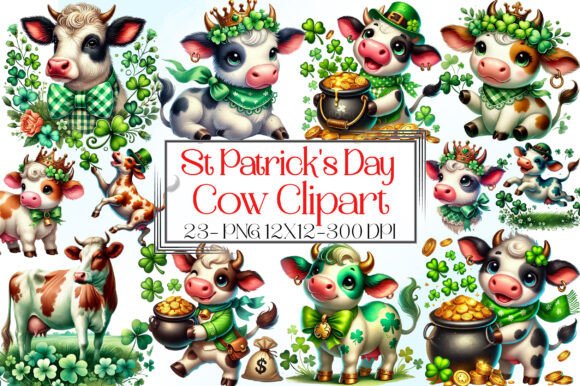
The visual personality of this Watercolor St. Patrick s Cow Clipart is undeniably charming. It strikes that difficult balance between festive and sweet, avoiding the garish neon greens that often plague holiday merchandise. The mood is nostalgic and gentle, which immediately signals to me that this belongs on natural fibers rather than shiny polyester performance wear. When assessing illustrations for embroidery, I look for clear separation of color fields. Watercolor styles can be tricky because they rely on gradients that machines cannot replicate without excessive stitch density.
In reviewing the layout, the cow’s shape offers distinct boundaries that are friendly for digitizing. This is crucial. If you plan to convert this into an applique design, the silhouette is clean enough to support a satin stitch border without requiring excessive manual editing. For those considering a full-fill embroidery approach, the whimsical nature of the art allows for textured fill stitches that mimic the brushwork, rather than demanding flat, solid coverage that could distort lightweight fabrics. The design feels like it was created with handmade products in mind, rather than just being a generic clipart afterthought.
Real-World Application: The Spring Tote Bag Test
To truly judge the viability of this graphic, I mentally walked through a recent client project: a custom embroidered tote bag for a local farm-to-table market vendor. They needed something seasonal but reusable year-round. This is where Watercolor St. Patrick s Cow Clipart shines as a versatile asset. On a canvas tote bag, the organic lines of the watercolor style complement the fabric texture beautifully. Unlike rigid, cartoonish vectors, this illustration breathes with the material.
I envision this working exceptionally well for sweatshirt embroidery on cream or sage green fleece. The key here is scale. Because the details are painterly, shrinking this design down to a 2-inch pocket logo might result in a muddy blob of thread. However, scaled up to a 5x7 inch center chest placement, it becomes a statement piece that drives buyer engagement. For Etsy sellers focusing on nursery decor, this illustration transitions perfectly to baby blankets or pillow covers. The lack of harsh outlines makes it feel safer and softer for infant items, increasing its perceived value as a thoughtful, personalized gift.
Navigating Fabric Limitations and Stabilizer Choices
While the aesthetic is flexible, technical execution requires care. I would advise against using this specific watercolor style on highly textured fabrics like terry cloth or thick ribbed knits unless you are doing applique. The subtle color variations that make the clipart special will get lost in the pile of the fabric. Similarly, stretchy jersey knits demand heavy stabilization; otherwise, the registration of the "watercolor" layers will shift, ruining the illusion of painted depth.
For dark fabrics, proceed with caution. Watercolor effects typically rely on white or light backgrounds to create transparency and luminosity. Stitching this onto black or navy fabric will require a white underbase, which adds significant stitch density and stiffness. If your business model relies on quick turnaround times for custom apparel, this design is best reserved for light-colored garments where the thread colors can interact directly with the fabric base. Always check your hoop size constraints before committing to a large format; the sprawling nature of cow illustrations can sometimes exceed standard 4x4 hoop capabilities, necessitating a larger setup or splitting the design.
Commercial Viability for Makers and Sellers
From a business perspective, Watercolor St. Patrick s Cow Clipart offers strong potential for craft business owners. Seasonal designs often have a short shelf life, but the artistic quality here extends its usability beyond March 17th. It reads as "farmhouse spring" just as much as "St. Patrick's Day," allowing you to keep listings active longer. When creating printable mockups for digital product previews, ensure the lighting matches the softness of the art. High-contrast, harsh shadows in mockups can mislead customers about the final handmade product appearance.
For those selling finished goods, this design supports premium pricing better than generic clipart because of its unique, hand-painted feel. Customers trust brands that offer cohesive aesthetics. Using this illustration across multiple products—matching tea towels, aprons, and holiday gifts—creates brand consistency that encourages repeat purchases. However, always verify the licensing terms included with your digital embroidery file. Ensure you have commercial rights if you plan to sell physical items or incorporate the art into new digital design assets for resale.
Essential Pre-Stitch Checklist for Designers
Before you load this design into your machine for a paid order, run through these practical checks to protect your reputation and materials:
- Test Stitch on Scrap: Never assume the digitizer’s settings match your machine’s tension. Run a test on the exact fabric you intend to use to check for puckering or gaps.
- Evaluate Thread Colors: Watercolor requires blending. Check if your current thread palette has the necessary variegated or matte threads to replicate the soft effect, or if you need to adjust the color chart.
- Check Stitch Density: Use your software to analyze density maps. If areas exceed 0.8mm spacing on lightweight fabric, add underlay or reduce density to prevent tearing.
- Verify Hoop Compatibility: Measure the actual dimensions. Do not rely solely on the file name. Confirm it fits your largest available hoop with adequate margin for stabilizer grip.
- Inspect Small Details: Zoom in at 100% view. Are there tiny running stitch elements that might disappear? Simplify them if necessary to ensure clarity in the finished product.
- Mockup Reality Check: Create a black and white version of your mockup to test contrast. If the design vanishes without color, it may not work on tone-on-tone fabric combinations.
- Wash Test: If selling baby embroidery or kitchen items, wash and dry your test sample. Watercolor fills can sometimes pull apart after laundering if not properly secured with edge stitches.
Ultimately, Watercolor St. Patrick s Cow Clipart is a delightful addition to the seasonal embroidery landscape, provided it is treated with technical respect. It bridges the gap between digital art and tactile craft effectively. By understanding its strengths in soft aesthetics and its limitations regarding fabric texture and density, you can transform this illustration from a simple screen image into a high-quality, profitable embroidered product that customers will cherish. Whether you are making a boutique product line or a singular personalized gift, let the medium of thread enhance the original art, not compete with it.