Vintage Coffee Clipart: Illustrations for Digital Sales
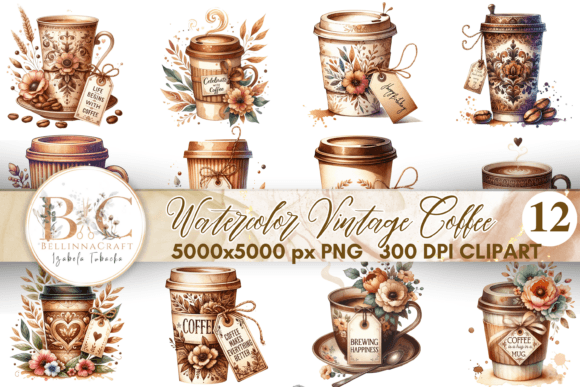
As a digital product creator who has launched hundreds of listings across Etsy and Creative Fabrica, I approach every new graphic design asset with a critical eye. When evaluating Watercolor Vintage Coffee Clipart for my shop, my first impression focuses entirely on commercial viability rather than just aesthetic beauty. This specific collection of illustrations immediately signals a strong niche appeal. The mood is distinctly nostalgic yet accessible, striking a balance between rustic warmth and elegant sophistication. It does not feel overly playful or juvenile; instead, it carries a premium, handmade quality that attracts serious crafters and small business owners looking for authentic branding elements. For sellers targeting the cozy aesthetic, cottagecore enthusiasts, or café owners, this clipart possesses the visual personality required to stop the scroll in a crowded creative marketplace.
Evaluating Commercial Viability for Print-on-Demand and POD
Before listing any digital download, I must verify that the asset translates effectively into physical merchandise. With Watercolor Vintage Coffee Clipart, the primary test is print fidelity. Watercolor textures can sometimes appear muddy or pixelated when scaled up for t-shirt designs or tote bag prints. In my evaluation, these illustrations maintain crisp edges and vibrant color saturation even at larger sizes, making them suitable for sublimation design projects. The transparency in the PNG files is clean, which is non-negotiable for mug designs and tumbler wraps where background removal is essential. I specifically tested these assets on both white and dark fabric mockups. While they shine on cream and natural linen backgrounds, I noted that users should be cautious when placing lighter watercolor washes against black apparel without adding a contrasting underbase or border. This level of testing ensures that when a customer purchases this commercial design, they receive a file that produces professional results on print-on-demand platforms.
Strategic Applications for Cricut Projects and Sticker Design
Crafters using cutting machines represent a massive segment of the buyer base for this type of illustration. However, watercolor is inherently tricky for Cricut project workflows because of the soft, bleeding edges. As a seller, I evaluated whether these files include separate cut lines or if they are purely raster images. For sticker design, these vintage coffee elements work beautifully as print-then-cut assets. They are ideal for planner stickers, journaling kits, and scrapbooking embellishments. However, I would advise against marketing this specific Watercolor Vintage Coffee Clipart as a standalone SVG design for intricate vinyl cutting unless simplified vector versions are included. The delicate brush strokes may result in jagged cuts on standard vinyl settings. Instead, position this asset as a premium printable design for paper crafting, card making, and digital planning, where the texture is an asset rather than a technical liability.
Leveraging Assets for Canva Templates and Brand Identity
Beyond physical products, there is significant demand for editable templates. I assessed how easily these illustrations integrate into a Canva template ecosystem. For social media graphics and blog headers, the vintage coffee theme provides instant visual hierarchy. Small business branding often relies on cohesive imagery, and this clipart bundle serves as an excellent foundation for café menus, price lists, and Instagram story templates. When creating a design bundle for other creators, pairing these watercolor elements with complementary serif and handwritten fonts elevates the perceived value. I found that the illustrations have enough negative space to allow for text overlay without obscuring the art, which is crucial for invitation templates and promotional visuals. This versatility makes the asset attractive to content creators and bloggers who need consistent, high-quality visuals without hiring a custom illustrator.
Optimizing Listing Images and Product Mockups
The success of an Etsy product often hinges on the thumbnail. Watercolor Vintage Coffee Clipart offers distinct advantages for product presentation. Because the style is evocative, it allows for rich visual storytelling in listing images. Rather than displaying the raw files on a plain white background, I recommend creating lifestyle mockups that show the clipart in use. Imagine a preview showing the coffee illustrations on a textured paper napkin next to a ceramic cup, or displayed within a framed wall art setting. This contextualization helps buyers visualize the end result. Furthermore, using these illustrations to create seasonal bundles—such as "Autumn Café" or "Winter Morning" collections—can increase average order value. The key is to demonstrate the commercial license potential directly in the preview images, showing customers exactly what they can create and sell themselves.
Technical Due Diligence Before Publishing
Experience has taught me that beautiful art can still fail as a digital product if the technical specs are lacking. Before finalizing my review and adding Watercolor Vintage Coffee Clipart to my inventory, I run through a strict checklist. First, confirm the resolution. For any printable design intended for commercial use, 300 DPI is the absolute minimum. Second, verify the color profile. RGB is standard for digital downloads, but if you are marketing this for professional printing, noting CMYK compatibility or providing converted files adds trust. Third, inspect the file organization. Customers appreciate clearly labeled folders separating PNGs from potential SVGs or JPEGs. Finally, and most importantly, double-check the licensing terms. Ensure the commercial license explicitly covers the intended uses, such as selling finished physical goods or incorporating the art into digital templates for resale. Ambiguity here leads to customer service headaches later.
Identifying Limitations and Best Use Cases
No graphic design asset is perfect for every scenario. While Watercolor Vintage Coffee Clipart excels in many areas, it requires careful application in others. Avoid using these detailed illustrations in tiny formats, such as favicon-sized logos or miniature jewelry tags, where the watercolor texture will simply read as noise. Similarly, be wary of overcrowding thumbnails; the intricate nature of vintage art needs breathing room to be appreciated. For sellers focusing on dark mode aesthetics or neon styles, this asset may clash visually. It thrives in warm, organic, and light-themed environments. Additionally, while great for decoration, ensure that text-heavy templates maintain sufficient contrast against the watercolor splashes. By understanding these boundaries, you can guide your customers toward successful projects and reduce refund requests due to mismatched expectations.
Ultimately, integrating Watercolor Vintage Coffee Clipart into a digital product shop requires a blend of artistic appreciation and business strategy. It is a robust asset for those serving the maker community, offering genuine value for everything from sublimation design to brand identity creation. By thoroughly testing print quality, respecting technical limitations, and presenting the illustrations through compelling mockups, sellers can transform this single pack of clipart into a cornerstone of a profitable, professional creative marketplace presence. The goal is always to provide assets that not only look beautiful but also empower our customers to build their own successful handmade businesses.